All Pioneers (100)
Profile 1 of 100
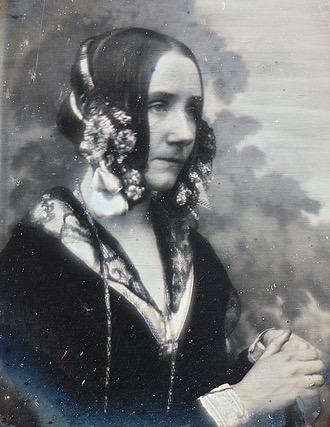
Ada Lovelace
Lifespan 1815–1852
Technical Depth beginner
Key Breakthrough First Published Computer Algorithm (Bernoulli Calculation, Note G, 1843)
Focus Areas
algorithms theoretical computing software engineering
Topic Keywords
#algorithms #analytical-engine #symbolic-computation #computer-history
Source: Historical Biographical Archive / Wikimedia Commons

Ada Lovelace

Mathematician & Pioneer of Algorithmic Computation

Biographical Overview

Published the first computer algorithm in history in 1843 to calculate Bernoulli numbers on Charles Babbage's mechanical Analytical Engine. Lovelace was the first person to realize that computing engines were not limited to arithmetic, conceiving general-purpose software a century before modern electronic computers existed.

"The Analytical Engine weaves algebraic patterns, just as the Jacquard loom weaves flowers and leaves."

— Ada Lovelace

Key Technical Breakthroughs & Inventions

01
The First Computer Algorithm (Note G, 1843) Wrote an execution trace specifying memory variables, punch-card operations, loops, and conditional branching to calculate Bernoulli numbers on the Analytical Engine—the earliest published software program.
02
Separation of Hardware and Software Formulated the distinction between a machine's physical mechanisms (the Store and Mill) and the coded instructions that drive it, proving that software is an abstract mathematical layer independent of physical gears.
03
Concept of General Symbolic Media Realized that if mathematical numbers could represent musical pitches, letters, or logical states, the machine could compose music, process text, and manipulate symbols beyond simple calculations.
04
The Lovelace Objection on Machine Cognition Articulated the principle that mechanical computers cannot originate creative ideas of their own and only execute what humans instruct them to perform, a foundational thesis later analyzed by Alan Turing in 1950.
💡

Historical Context & Impact

In short

Ada Lovelace recognized in 1843 that computing machines could process symbols rather than just numbers, conceiving the concept of software 100 years before electronic computers existed. While contemporaries saw Babbage's gears as a simple arithmetic calculator, Lovelace proved that if numbers can symbolize musical notes or letters, machines can execute general algorithms.


Selected Honors & Industry Recognition

Original Publications, Papers & Archives

Connected Contemporaries

All 100 Pioneers →