All Pioneers (100)
Profile 98 of 100
1977– advanced

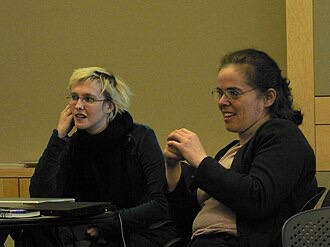
Maria Chudnovsky

Professor of Mathematics at Princeton & Proof of Strong Perfect Graph Theorem
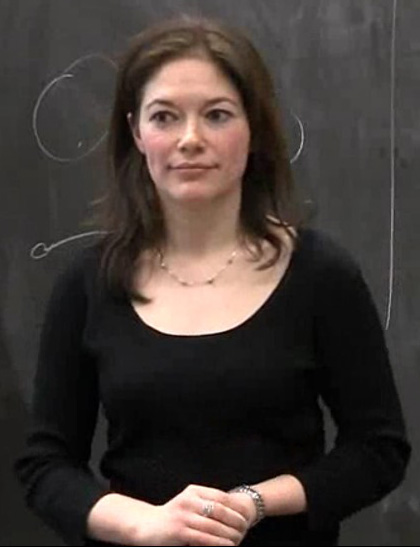
Maria Chudnovsky

Biographical Overview

MacArthur "Genius" Fellow and Professor of Mathematics at Princeton University. In 2002, with Robertson, Seymour, and Thomas, Chudnovsky proved Claude Berge's 40-year-old Strong Perfect Graph Conjecture, resolving one of the most celebrated open problems in discrete mathematics and theoretical computer science.

"When you work on a problem for years, you build an intuition for the hidden geometry of the graph that cannot be explained in a single equation."

— Maria Chudnovsky
Lifespan 1977–
Technical Depth advanced
Key Breakthrough Proof of the Strong Perfect Graph Theorem (2002) & Claw-Free Decomposition
Focus Areas
graph theory discrete mathematics combinatorial algorithms
Topic Keywords
#graph-theory #discrete-math #algorithms #macarthur-fellow #combinatorics
Source: Historical Biographical Archive / Wikimedia Commons
💡

Historical Context & Impact

In short

Claude Berge proposed the Strong Perfect Graph Conjecture in 1961, and for forty years it baffled the world's greatest mathematicians and computer scientists. As a graduate student at Princeton in her twenties, Chudnovsky co-authored the 178-page landmark proof that finally solved it, earning the Fulkerson Prize.

Key Technical Breakthroughs & Inventions

01
Proof of the Strong Perfect Graph Theorem (2002) Co-authored the 178-page proof proving that a graph is perfect if and only if neither it nor its complement contains an odd cycle of length at least 5 as an induced subgraph.
02
Polynomial-Time Recognition of Perfect Graphs Developed an O(n^9) polynomial-time recognition algorithm for perfect graphs, linking structural graph theory with efficient optimization.
03
Structure of Claw-Free Graphs Established comprehensive structural decomposition theorems for claw-free graphs, solving longstanding open questions in combinatorial optimization.
04
Graph Coloring and Maximum Clique Bounds Proved fundamental chromatic number bounds and polynomial-time coloring algorithms for broad graph classes.

Selected Honors & Industry Recognition

Original Publications, Papers & Archives

Connected Contemporaries

All 100 Pioneers →