Cryptographic Hash Tools Play with hashes, see how they work, and learn the history behind them.
Hash text in real time, see what happens when you flip a single bit, inspect Bitcoin blocks, and test algorithm speeds. Everything runs right here in your browser.
Cryptographic Hash Calculator
Compute cryptographic digests locally. Use SHA-256/SHA-512 for integrity; avoid MD5/SHA-1 for security. Optionally compute an HMAC for message authentication.
Women in Computing
Celebrating the innovators who pioneered algorithms, proof-of-work, compilers, network routing, and processor architecture.
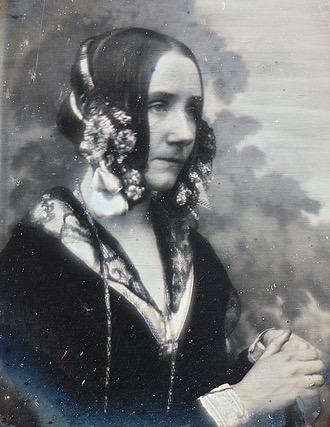
Ada Lovelace
Mathematician & Pioneer of Algorithmic Computation
Published the first computer algorithm in history in 1843 to calculate Bernoulli numbers on Charles Babbage's mechanical Analytical Engine. Lovelace was the first person to realize that computing engines were not limited to arithmetic, conceiving general-purpose software a century before modern electronic computers existed.

Grace Hopper
Rear Admiral, US Navy & Inventor of the First Compiler
Built the first operational compiler (the A-0 System, 1952) and pioneered machine-independent programming languages with FLOW-MATIC, which established the foundation for COBOL. Hopper spent over four decades in the United States Navy standardizing enterprise software systems and proving that code could be written in human-readable English.

Margaret Hamilton
Director of the MIT Software Engineering Division & Apollo Flight Software Architect
Led the MIT software division that engineered the on-board flight computer for the Apollo moon missions. Hamilton coined the term "software engineering" and created the priority-scheduling operating system that prevented an emergency abort during Apollo 11's lunar descent.

Radia Perlman
Network Protocol Architect & National Inventors Hall of Fame Inductee
Invented the Spanning Tree Protocol (STP / IEEE 802.1D) that allows Ethernet networks to self-configure without crashing from infinite packet loops. Perlman pioneered robust link-state routing (IS-IS) and architected TRILL for high-throughput cloud datacenters, earning the title "Mother of the Internet."

Cynthia Dwork
Gordon McKay Professor of Computer Science at Harvard University
Co-invented Proof-of-Work (1992) and formulated the mathematical definition of Differential Privacy (2006). Dwork solved fundamental problems across distributed systems, cryptography, and algorithmic fairness, creating the mathematical foundation for both blockchain consensus and privacy-preserving data analysis.
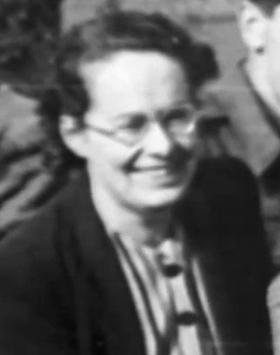
Joan Clarke
Cryptanalyst, Deputy Head of Hut 8 at Bletchley Park & Pioneer of Bayesian Cryptanalysis
Decrypted wartime German Naval Enigma signals at Bletchley Park and pioneered early Bayesian sequential probability testing. Clarke served as Deputy Head of Hut 8, breaking complex four-rotor U-boat ciphers to protect Allied transatlantic convoys.

Gladys West
Mathematician, Satellite Geodesist & Pioneer of the Global Positioning System (GPS)
Programmed the mathematical satellite geodesy models and gravitational Earth shape calculations that made the Global Positioning System (GPS) possible. West computed complex orbital perturbations on the IBM 7030 Stretch supercomputer at the Naval Surface Warfare Center, creating the World Geodetic System baseline.
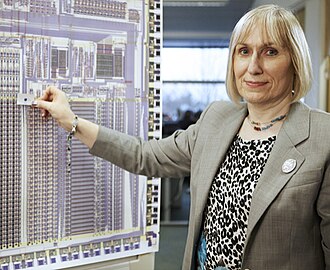
Sophie Wilson
Chief Architect of the ARM RISC Instruction Set & Acorn BBC Micro
Architected the original 32-bit ARM instruction set and wrote BBC BASIC. Wilson designed the load/store RISC architecture that runs on more than 280 billion chips worldwide, powering virtually all modern smartphones, tablets, and Apple Silicon chips.
Master Cryptographic Concepts
From file integrity verification to proof-of-work mining and password salting, explore step-by-step guides written for developers and researchers.
Proof of Work: How Hash Puzzles Secure Blockchains
Learn the mathematics of hash difficulty targets, nonces, and Cynthia Dwork's 1992 anti-spam invention that powers decentralized networks.
Read Tutorial →Salting and Peppering: Why Plain Hashes Fail
Why fast hashes like SHA-256 are vulnerable to GPU brute forcing, and how CSPRNG salts, secret peppers, and Argon2id secure credentials.
Read Tutorial →Collision vs Pre-image Resistance Explained
The 3 foundational security pillars of hash functions, and how the Birthday Paradox cuts collision resistance to exactly n/2 bits.
Read Tutorial →Verify File Integrity with SHA-256
Learn cryptographic verification in the terminal and browser to detect corrupted downloads, tampering, and supply-chain attacks.
Read Tutorial →Understanding the Avalanche Effect
Why changing a single bit in an input cascades to flip 50% of the entire output hash—the cornerstone of diffusion in cryptography.
Read Tutorial →Merkle Trees: Logarithmic Verification
How hierarchical hash trees provide O(log n) cryptographic membership proofs for millions of transactions in Bitcoin and Git.
Read Tutorial →